I’ve long imagined a slightly better digital world: one where unlocking my phone brings a notification that my grandmother has challenged me to a game of Scrabble. I make my move. She responds with hers. We continue trading turns over several days, and throughout it all, neither of us is forced to endure overwhelming, brightly colored ads with misleading skip buttons that trigger even more pop-ups. A simple, quiet experience.
You might assume that such an app already exists. It doesn’t. Or rather, it didn’t—until now. (Zynga, I will never forgive you for what you did to Words With Friends).
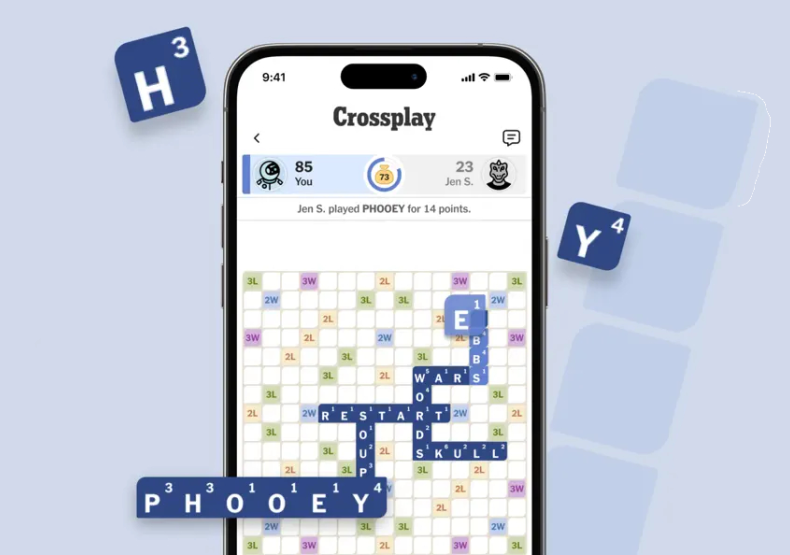
At last, The New York Times Games has delivered something close to that vision with a Scrabble-like multiplayer app called Crossplay, now available on both iOS and Android.
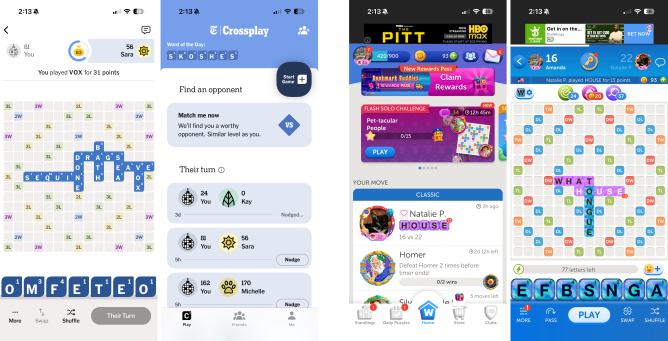
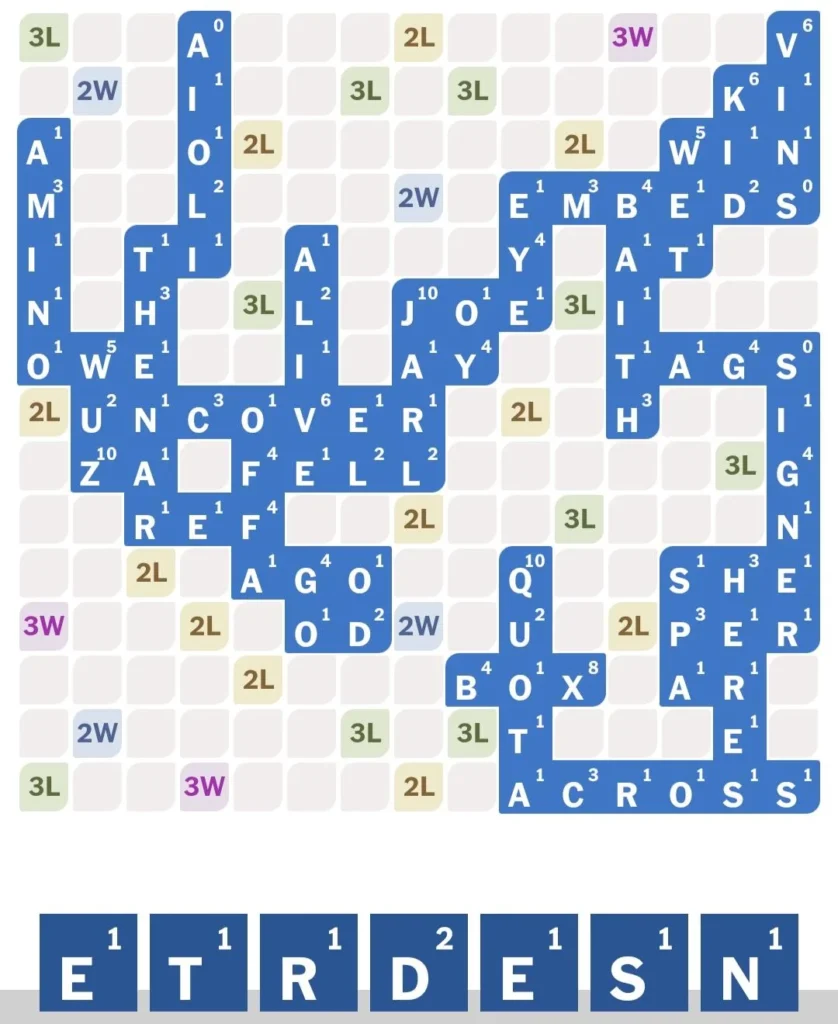
Crossplay is not technically a Scrabble clone, but for most casual players—unless you’re competing in tournaments or have memorized the official Scrabble dictionary—it essentially feels like Scrabble. The board layout and tile distribution differ slightly, and there is a modest rule adjustment for what happens when the tile bag runs out. These changes may be related to licensing or legal considerations. For everyday play, they are barely noticeable.
Like many social word games, Crossplay lets you invite friends directly or match with strangers at a similar skill level. For subscribers to The New York Times Games, the experience is completely ad-free. Free users may encounter banner ads, but even that is a lighter experience compared with alternatives like Words With Friends, which often feels cluttered with intrusive monetization and distracting interface elements.
While Scrabble purists may debate the rule variations, they may find something more interesting in Crossplay’s standout feature: CrossBot. Much like WordleBot and ConnectionsBot, CrossBot analyzes each move you make during a game, evaluating whether better options were available. It scores your performance in terms of both strategy and luck, highlighting your strongest moves as well as the moments where alternative plays might have been stronger.
The New York Times has published its Crossword puzzle since 1942, but its digital games division only truly accelerated in 2022 following the acquisition of Wordle after its viral breakout. According to data from ValueAct Capital, a hedge fund investor in The New York Times, users were spending more time in the Games app than in the core News app by the end of 2023.
I’m clearly not alone in wanting a calmer, more respectful multiplayer word game experience without constant distractions. Jonathan Knight, head of Games at The New York Times, believes this philosophy is central to the division’s success.
“Games like Spelling Bee and Wordle found a way to take the magical ‘solve a puzzle’ feeling and create a very mainstream, quick, snackable version of that that works well on your phone, that’s very sharable with friends and family, and that I think is very respectful of your time,” Knight told TechCrunch. “You can just decide to do it in the morning, or at night before you go to bed, and then go to bed.”
According to The New York Times, Wordle was played 4.2 billion times in 2025, while Connections reached 1.6 billion plays.
When TechCrunch previously spoke with Wordle creator Josh Wardle shortly before the game’s acquisition, he expressed a similar sentiment about design philosophy. He said that “people have an appetite for things that transparently don’t want anything from you.”
Of course, a publicly traded company like The New York Times is not quite the same as an independent developer creating a game for a partner, but the underlying spirit has largely remained intact. Even after Wordle’s peak viral moment passed, engagement has stayed strong, according to Knight.
“The share rate on Wordle — the percentage of users that share every day — has not changed since we acquired the game,” he said. “It’s a really cool way to bring people together. You know, we see the Pope talking about his Wordle, sharing with his brother.”
Now, Knight and his team hope to extend that same sense of calm simplicity into Crossplay.
“We wanted people to be able to just get in and play the game with friends and family, and then get on with your day,” he said.